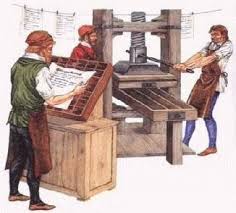
Johannes Gutenberg was the inventor of the printing
press. Indeed, the German goldsmith's 15th-century contribution to the
technology was revolutionary, enabling the mass production of books and the
rapid dissemination of knowledge throughout Europe.
When Gutenberg invented the
printing press in 1445, he forever changed the lives of people in Europe and,
eventually, all over the world. Previously, bookmaking entailed copying all the
words and illustrations by hand. Often the copying had been done onto
parchment, animal skin that had been scraped until it was clean, smooth, and
thin. The labor that went into creating them made each book very expensive.
Because Gutenberg's press could produce books quickly and with relatively
little effort, bookmaking became much less expensive, allowing more people to
buy reading material.
The demand for books grew
In the Middle Ages, books had
been costly and education rare; only the clergy had been regular readers and
owners of books. Most books had been written in Latin, considered the language
of scholarship. In the Renaissance, the educated middle classes, who could now
afford books, demanded works in their own languages. Furthermore, readers
wanted a greater variety of books. Almanacs, travel books, chivalry romances,
and poetry were all published at this time. Simultaneously, a means of printing
music was also invented, making music available at a reasonable cost. As the
demand for books grew, the book trade began to flourish throughout Europe, and
industries related to it, such as papermaking, thrived as well. The result of
all of this was a more literate populace and a stronger economy.